


Wrist Injury
Paediatric Management Advice
What are the symptoms of a wrist injury?
Symptoms of a wrist injury will often include:
- Pain around the hand and forearm
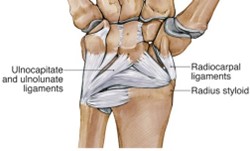
- Pain when moving the hand and wrist
- Swelling
- Bruising
Pain relief
Consult your GP or local pharmacist for advice as to which medication is suitable for your child to take.
Important signs and symptoms to look out for
If your child experiences any of the following symptoms, please seek further urgent medical advice:
- Worsening swelling or pain in the hand and wrist not relieved by elevation and rest
- Worsening pain in the wrist and fingers
- Regular or constant severe night pain
- Loss of sensation or persistent pins and needles / numbness in the hand / wrist or fingers
- Altered colour or unusual sweating of the hand / wrist
- Increased temperature or feeling hot and shivery may indicate an infection
Only continue to read if you have none of the above symptoms
Recovery and Rehabilitation
Healing times
- Wrist injuries will usually heal within a few weeks with conservative management.
- Swelling and bruising may still be present for up to 10 days.
- Normal activity levels are usually restored after 6-8 weeks. The risk of re-injury is higher in the first 4-6 weeks.
- As your child completes the exercises provided, they may notice some aching. This is normal. Should this happen, apply ice (ice pack or pack of frozen vegetables) wrapped in a damp cloth over the wrist for 15-20 minutes and elevate your wrist to help reduce any inflammation. Do not apply ice if your child has circulatory problems or reduced skin sensation. There is no need to stop playing or exercising unless it is causing significant pain.
Physiotherapy
- It is important to keep your child’s wrist moving even when painful. Evidence has shown that completing basic exercises helps the sprained ligaments to heal.
- In most cases your child will not need to be seen by a Physiotherapist for rehabilitation. Following the exercises provided below should aid recovery.
- If, after 6 weeks, your child is still having problems, please contact the Paediatric Physiotherapy service on the number provided to book an assessment.
Exercises — Phase 1— Movement
Completing these exercises 3-4 times per day will help maintain range of movement and reduce swelling. Try to encourage your child to use their hand as normally as pain allows.
Finger flexion and extension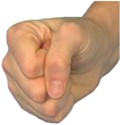
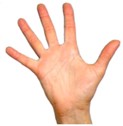
Sit in a comfortable position, slowly open your hand as
much as you can before making a fist. Repeat 10-15 times.
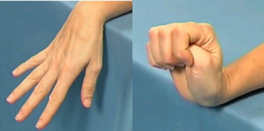 Wrist flexion and extension
Sit with your hand rested over a table or chair arm. Slowly let your hand relax to allow your wrist to bend before making a fist and raising your fist in the
air. Repeat 10-15 times.
Ulnar and radial deviation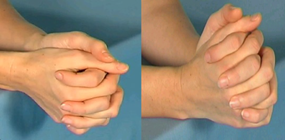
Clasp your hands together and support your forearms on a table with your hands over the edge. Bend your wrist up and down. Repeat 10-15 times
Exercises — Phase 2 — Strengthening
Once the movement in your child’s wrist has returned and they are managing the exercises in phase 1 comfortably, move on to phase 2.
Grip Strength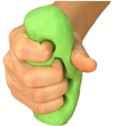
Using an object with some resistance, such as play dough or a stress ball, slowly squeeze the object as firmly as possible and relax. Repeat 10 times.

Wrist flexion and extension with a small weight
In either sitting or standing hold a small weight, such as a small filled water bottle. Slowly bend your wrist before slowly raising it as high as possible. You can use your other hand for support if you need to. Repeat 5-10 times.
Exercises — Phase 3 — Strengthening continued
Once your child is able to do the exercises in phase 2 comfortably, progress to phase 3.
Wrist ulnar and radial deviation with a small weight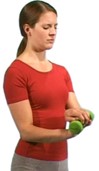
In either sitting or standing hold a small weight such as a small, filled water bottle. Slowly move your hand left to right. You can use your other hand for support if you need to. Repeat 5-10 times.
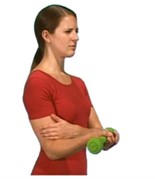 Wrist pronation and supination with a small weight
In either sitting or standing hold a small weight such as a small, filled water bottle. Slowly twist your forearm so that your palm faces upwards before twisting back down. You can use your hand for support if you need to. Repeat 5-10 times.
Exercises — Phase 4 — Further strengthening and proprioception
Once your child has managed to complete phase 3, they can move on to phase 4. Working on the proprioception around the wrist / hand will help to prevent further injury. Proprioception is the perception or awareness of the position and movement of the body.

Rolling a ball up and down a wall
Stand next to a wall holding onto a ball with your injured hand. Slowly roll the ball up and down the wall. Repeat 10-15 times.
 Throw and catch
In standing, throw and catch a ball using either one or both hands. Vary your technique so you complete underarm, chest pass and over arm. Repeat 10-15 times.
Wall press up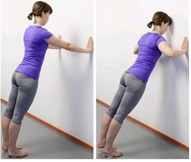
Stand next to a wall with your arms shoulder distance apart. Place both hands on the wall and slowly go into a press up by bending both elbows and pressing your chest to the wall. Repeat 10-15 times.
If you need any further information or you feel that you need further intervention please contact the Paediatric Physiotherapy department on: 01282 803587 or email paeds.physiotherapy@elht.nhs.uk