

Osgood - Schlatter Disease
Paediatric Management Advice
What is Osgood - Schlatter Disease?
Osgood - Schlatter Disease is a common cause of knee pain in children, especially those that are very active. It relates to pain and swelling in an area of growth just below the kneecap on the shin bone. One or both knees may be affected. Activities that put a lot of stress through this area such as running, jumping, kneeling and squatting are aggravating factors. It can also be related to a growth spurt, as the bones grow faster than the muscles can stretch which can lead to tightness.
Who does it affect?
It affects boys between 12 - 14 years of age and girls between 10 - 13 years of age, during periods of growth
Symptoms
- The main symptom of Osgood - Schlatter disease is pain just below the patella (kneecap). The severity of the pain is variable , usually worse during and just after activity . The pain then typically eases with a period of rest.
- A small, tender, bony bump may develop under the patella.
Important signs and symptoms to look out for
If your child experiences any of the following symptoms, please seek further urgent medical advice:
- Swelling or bruising, not improved by elevation or rest
- Regular or constant night pain
- Leg deformity if this follows a traumatic injury
- Loss of sensation or persistent pins and needles / numbness in leg
- There is a sudden deterioration of function or movement
- There is a sudden onset of an unexplained limp
- Pain that does not settle with rest or reduction of activity
- Increased temperature, feeling hot and shivery may indicate an infection
- Redness and heat at hip, knee or ankle may indicate an infection
- Inability to walk on the leg
Only continue to read if you have none of the above symptoms
Will my child need treatment?
Osgood - Schlatter disease usually resolves as your child stops growing. It may take several weeks or months for the pain to completely stop. In most cases it goes away on its own with rest and time, however, if you ignore the pain and play through it, the condition may get worse and may be more difficult to treat. When the pain is completely gone, you can slowly return to your previous level of activity. With future growth spurts the pain may return, therefore continue with the stretches and follow the advice given.
The following will help to relieve symptoms:
- Ice the affected area for 10-15 minutes, especially after activity. Make sure you protect the skin by wrapping the ice in a towel. Regularly check the skin for redness. Do not apply ice if your child has circulatory problems or reduced skin sensation.
- Rest Limit time spent doing activities that aggravate the condition. Consider alternative sports that do not involve as much stress on the knees i.e. cross trainer, swimming and gentle cycling. If your symptoms are still persisting even with low impact activity, you may need complete rest from these.
- Shoes Avoid activities in bare feet and wear supportive shoes with shock absorption.
- Orthotics Altered foot posture can contribute to the stress going through the knee. Insoles may help to correct altered foot posture and reduce the load.
Exercises
Try to do these exercises at least 3 times a day. Stop them if you feel they are making your symptoms worse or bringing on new pain and contact the physiotherapy department.
Quadriceps Stretch
Stand holding onto a support if required. Bend one knee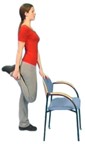 and take hold of the ankle with the other hand. Draw your heel towards your buttock; tilt your hips forwards so your knee points towards the floor. Feel the stretch in the front of your thigh. Hold for 30 seconds. Repeat 3 times on each leg
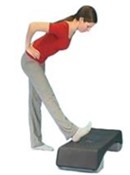
Hamstring Stretch
Stand with the leg to be stretched on a foot stool. Flex your ankle and push the heel towards the footstool keeping your knee straight. Then bend your upper body forwards from your hips keeping your back straight. You should feel a stretch behind your knee and thigh. Hold for 30 seconds. Repeat 3 times on each leg.
Gastrocnemius Stretch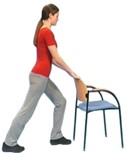
Stand in a walking position with the leg to be stretched straight behind you and the other leg bent in front of you. Take support from a wall or chair. Lean your body forwards and down until you feel the stretching in the calf of the straight leg. Hold for 30 seconds. Repeat 3 times on each leg.
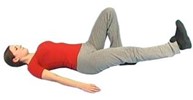 Straight leg raise
Lie down with your leg straight in front of you. Point your toes upwards and slowly lift your leg (approximately 30cm). Hold for 2-5 seconds then gently lower your leg back down. Aim to achieve 30 repetitions as able.
Bridge
Lie on your back with your knees bent and feet on the floor. Lift your pelvis and lower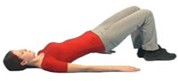 back gradually off the floor. Hold for 5 seconds. Slowly return to the starting position. Repeat 10 times.
If you need any further information or you feel that you need further intervention please contact the Paediatric Physiotherapy department on: 01282 803587 or email paeds.physiotherapy@elht.nhs.uk