


Hypermobility Exercises
Paediatric Management Advice
Please find below some exercises which can help to improve your core stability. Exercises have been shown to be effective in the management of hypermobility. Please note these may cause your muscles to ache when first starting them, this is completely normal. With hypermobility it is important that you complete regular exercise such as walking or swimming, as well as the below exercises. If you have any queries about the exercises please contact the Paediatric Physiotherapy department
Bridge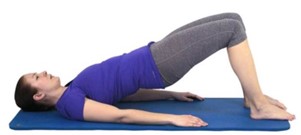
Lying on your back, bend your knees and have both feet flat on the floor. Squeeze your tummy and bum muscles and slowly lift your hips in the air. Try to make a straight line between your shoulders and knees. Hold for 5-10 seconds. Repeat 10 times, 3 times a day.
Clams
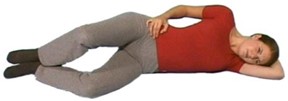 Lying on your side, with your knees bent. Keep your hips facing forward and ankles and feet together. Slowly raise your knee in the air, whilst keeping your hip still and hold for
30-60 seconds. Repeat 3 times on each side, 3 times a day
Fire Hydrant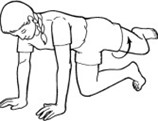
In a crawling position, place your hands directly under shoulders and knees directly under hips. Position your head so that your nose is pointing directly at the floor. Imagine the rectangle created between your shoulders and hips as a tabletop. Maintaining your "tabletop", raise one leg out sideways.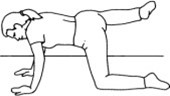
Keep your knee bent and keep your knee higher than your foot. Hold for 10 seconds. Repeat 5 times on each side, 3 times a day.
Superman
In a craw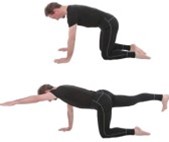 ling position, place your hands directly under shoulders and knees directly under hips. Position your head so that your nose is pointing directly at the floor. Imagine the rectangle created between your shoulders and hips as a tabletop. Maintaining your "tabletop", slowly lift your opposite arm and leg, whilst maintaining your tabletop. Hold for up to 10 seconds. Repeat 5 times on each side, 3 times a day.
Chair Squats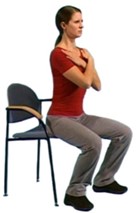
Stand with your feet hip-width apart and your toes pointed forwards. Push your hips back and sit down slowly, lightly touching your bottom to a chair, before standing straight back up again. Make sure you keep your chest up and shoulders down with your knees behind your toes (do not let them turn in).
Repeat 10-15 times, 3 times per day.
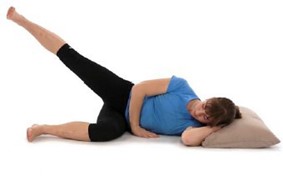 Hip Abduction in side-lying
Lie on your side with your affected knee on top. Have your bottom knee bent and your top leg straight. Squeeze your thigh and buttock muscles and lift your leg up. Do not let your body twist or collapse in the middle. Hold for 5 seconds. Repeat 10 times on each leg.
If you need any further information or you feel that you need further intervention please contact the Paediatric Physiotherapy department on 01282 803587 or email paeds.physiotherapy@elht.nhs.uk