


Paediatric Management Advice
What is flat foot?
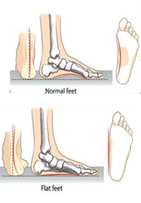
Most adult feet have an arch along the inside edge of the foot. Flat foot is when this arch is absent or reduced in standing. Most children are born with very little arching in the feet. As they grow and walk, the soft tissues along the bottom of the feet tighten, which gradually shapes the arches of the feet. Children with flexible flat foot often do not begin to develop an arch until the age of 5 years or older, and the foot arch is not fully developed until around 10 years of age. Some children never develop an arch.
Will my child need treatment?
If your child does not have any associated problems with their flat feet then they are unlikely to need treating. Many people have a long standing belief that flat feet are abnormal and require treatment with special shoes, insoles or even splints or braces, which is untrue. Children between 1-10 years of age can have flat feet. This is normal and their arches develop over their childhood as their muscles become stronger. Over 95% of children grow out of their flat feet and develop a normal arch by the age of 8. Most children with a persistent flat foot participate in physical activities including competitive sports and experience no pain or other symptoms and require no intervention or insoles. Evidence states we only provide insoles after aged 8 if they have pain and other associated problems linked to flat feet.
Footwear
Supportive footwear is always recommended for your child’s feet when outdoors. It is recommended that indoors your child walks barefoot as this helps to develop muscles in their feet.
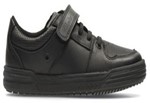
- Good heel depth
- Lace and velcro fastening
- Rounded sole
Important signs and symptoms to look out for
If your child experiences any of the following symptoms, please seek further urgent medical advice:
• Acute painful limp (or a chronic persistent limp).
- Acute joint pain.
• Joint swelling.
• Night pain: persistent or not responsive to simple analgesia, e.g. paracetamol, ibuprofen
• Deep and throbbing ‘bone pain’ – the child often points to the bone rather than joint.
• Systemic symptom, e.g. loss of appetite, fatigue, weight loss, pallor (pale skin).
• Delayed development, loss, or regression of motor milestones.
• Generalised muscle weakness.
Exercises that can help
Toe Raises 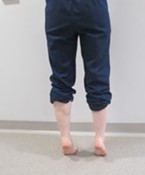
Stand holding onto the wall. Rise up onto your tip toes. Repeat 10 times. Complete 3 times per day.
Heel Raises 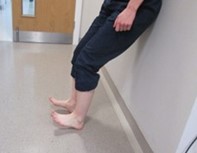
Stand with your back against the wall. Lift your toes up off the floor so you are resting on your heels. Repeat 10 times. Complete 3 times per day.
Tip Toe Walking 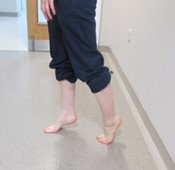
Practise walking up and down balancing on your tip toes for 30 seconds. Complete 3 times per day.
Heel Walking 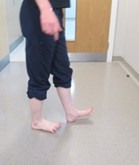
Practise walking up and down balancing on your heels, without your toes touching the floor, for 30 seconds. Complete 3 times per day.
If you need any further information or you feel that you need further intervention please contact the Paediatric Physiotherapy department on: 01282 803587 or email paeds.physiotherapy@elht.nhs.uk