


Elbow Injury
Paediatric Management Advice
What is an elbow injury?
Elbow soft tissue injuries occur when there is an injury to the tendon, ligament or muscle that surround and support the joint.
What are the symptoms? 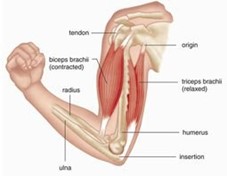
A soft tissue injury to the elbow may result in the following:
- Pain around the joint
- Pain with movement
- Reduced movement and stiffness
- Bruising around the elbow
Pain relief
Consult your GP or local pharmacist for advice as to which medication is suitable for your child to take.
Important signs and symptoms to look out for
If your child experiences any of the following symptoms, please seek further urgent medical advice:
- Worsening swelling not improved by elevation and rest
- Worsening, severe pain in the elbow
- Regular or constant severe night pain
- Night sweats
- Loss of sensation, persistent pins and needles / numbness and altered strength and control in the forearm or hand
- Altered colour or unusual sweating around the elbow
- Increased temperature or feeling hot and shivery may indicate an infection
Only continue to read if you have none of the above symptoms
Recovery and Rehabilitation
Healing times
- Elbow soft tissue injuries will usually heal within a few weeks. Swelling and bruising may still be present for up to 10 days.
- Normal activity levels are usually restored after 6-8 weeks.
- The risk of re-injury is higher in the first 4-6 weeks.
- As your child completes the exercises provided they may notice some aching. This is normal. There is no need to stop playing or exercising unless it is causing significant pain.
Initial Management
If your child has hurt their elbow, you can care for them at home using first aid principles (the Rest, Ice, Compression, Elevation (RICE) strategy) and elbow exercises. Treatment should start immediately and continue for the next 2 to 3 days.
- Rest - rest the injured elbow and initially avoid activities that cause a lot of pain.
- Ice - apply ice wrapped in a towel to the injured area for 10 to 15 minutes (be cautious of ice burns). Ice the injury every 2 to 4 hours for 2 to 3 days when your child is awake.
- Compression - use a firm bandage that is not too tight and does not stop circulation or cause extra pain. The bandage should cover from just above the elbow down to just below the elbow. This should be worn for 2 to 3 days when your child is awake.
- Elevation - If you have been given a sling, use it to keep your injured area elevated. You may find it more comfortable to use pillows to elevate it during the evening and at night.
Physiotherapy
- It is important to keep your child’s elbow moving even when painful. Evidence has shown that completing basic exercises helps the elbow to heal.
- Elbows get stiff very quickly so it is important to start the exercises below as soon as possible.
- In most cases your child will not need to be seen by a Physiotherapist for rehabilitation. Following the exercises provided in the leaflet will aid with recovery.
- If after 6 weeks your child is still having problems, please contact the Paediatric Physiotherapy service on the number provided to book an assessment.
Exercises — Phase 1 — Movement
Completing the below exercises will help maintain range of movement. Try to complete the exercises 3-4 times per day and use your elbow normally as pain allows.
Elbow flexion and extension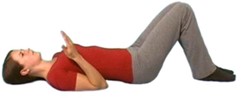
Lying down, slowly bend and straighten your elbow. Repeat 10-15 times.
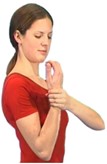 Assisted elbow flexion and extension
In standing, slowly bend and straighten your elbow by using your other arm to assist with the movement.
Repeat 10-15 times.
Elbow flexion and extension
In standing, slowly bend and straighten your elbow. Repeat 10-15 times.
Exercises — Phase 2 — Strengthening
Once you are able to complete the exercises in phase 1 comfortably, progress to phase 2.
Elbow extension with small weight
In standing, holding a small weight such as a small filled water bottle, slowly lifting the weight from your shoulders to overhead. Repeat 10 times.
Biceps curl with small weight
In stan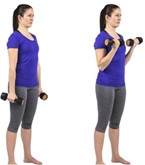 ding, holding a small weight, such as a small filled water bottle, with your arms straight, slowly bend your elbows and move the weight towards your shoulders. Repeat 10 times.
Shoulder press up against a wall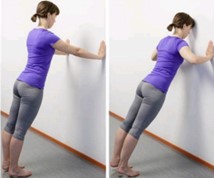
Standing with your hands against a wall - just wider apart than your shoulders: Slowly bend your elbows so that your chest moves towards the wall. Hold for 3 seconds before slowly returning back to the starting position. Repeat 10 times.
Exercises — Phase 3 — Further strengthening and proprioception
Once you can complete phase 2, move onto phase 3. To help prevent further injuries, it is important to work on progressive strengthening and proprioception. Proprioception is the perception or awareness of the position and movement of the body.
Throw and catch against a wall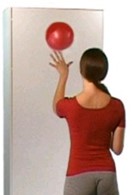
Stand in front of a wall holding a ball. Slowly throw the ball with sore arm to the wall and try and catch it with either one or both hands. Repeat 10 times.
Triceps dip
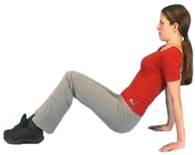 In sitting, extend your arms behind you with your palms flat on the bed. Slowly bend your elbows, so that your back is lowered and back up again. Don’t let your back touch the bed. Repeat 10 times.
If you need any further information or you feel that you need further intervention please contact the Paediatric Physiotherapy department on: 01282 803587 or email paeds.physiotherapy@elht.nhs.uk