


Desensitisation
Paediatric Management Advice
What is Hypersensitivity?
The nervous system needs to be sensitive enough to detect a potentially dangerous stimulus and let us know about it (by giving us pain). Sometimes, however, it becomes too sensitive, causing us pain that is not useful. Hypersensitivity arises because our nerve pathways become more sensitive when they relay damage messages – for example after an injury, or even when someone has persistent pain without any injury.
What is Desensitisation?
Some people who experience persistent pain will have increased sensitivity to things like touch, pressure, or temperature in the skin of the affected area. Desensitisation is an effective way to treat this increased sensitivity.
Desensitisation techniques are used to gradually improve tolerance to touch in the sensitive area of skin. The aim of these activities is to make sensations in the skin of the affected area feel more normal again, by re-educating the nervous system.
Follow the below programme to help desensitise your affected area. Start with stage 1 and progress to stages 2 and 3 as your affected area becomes less sensitive. The outcome of this programme is directly related to how frequently it is done. We recommend completing the programme over 6 times daily. At all other times touch and rub the area with the hand and clothes to continue to provide the area with sensory stimuli.
Stage 1 - Normal Massage
Put a small amount of cream (E45 or non-scented hand cream)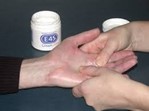 on to the sensitive area. Using small circular movements, massage into the sensitive area varying the pressure. Complete for 3-5 minutes.
Stage 2 - Textured massage
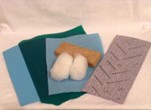 Choose 3 textures from something tolerable to something almost unbearable (e.g. tissues, sponge, Velcro or towelling). Begin with the most tolerable texture making small circular movements across the sensitive area for 1 minute, then progress onto the other textures. Complete this for a total of 3 minutes.
Stage 3 - Immersion Massage
Choose 3 household substances (e.g. pasta or rice).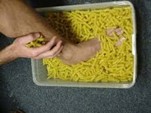 Start with the most tolerable working to the most intolerable, stirring the hand round in the substances. Complete this for a total of 3 minutes. Also try this with hot and cold water, at a temperature you can tolerate.